20 Free Ways For Choosing Anti-Termite Control Services In Jakarta
Wiki Article
Jakarta Homes: Subterranean Termite Defense
Walk through any Jakarta neighborhood--Menteng, Kebayoran Baru, Kelapa Gading--and you will see them: door frames swollen at the base, fine brown lines climbing foundation walls, tiny pinprick holes in skirting boards. A lot of homeowners think that it's just wear and tears. It is not. It is evidence that a colony of termites living in subterranean soil has already infiltrated the structure and is eating 24 all day all week long driven by Jakarta's unending humidity and the random invitation that contemporary construction techniques. To safeguard the integrity of a Jakarta property, it is necessary to change the pest control strategies that are taught in manuals from abroad and adopt strategies that are adapted to the unique species of soil, climate, and species of Jakarta.
1. The window and door frame is a common problem
Jakarta termites aren't able to break through concrete slabs. They get into the wood where it joins masonry at a high level. Around half of all attacks documented occur on wooden frames that are inserted in brick walls, door jambs and window sills. The wrong battle is being waged by termite service providers who show up at your residence with injection rods and drills aimed at the floor slab. The real battleground is the waist, where moisture is absorbed by glass and swells into the untreated wood.
2. Four Species, One City, Different Rules
Four subterranean species are found in Jakarta and their behavior is not similar. Coptotermes gestroi, the aggressive structural invader, is the dominant species. Microtermes Insperatus is the most destructive but also numerically dominant. Macrotermes gilvus builds visible mounds in gardens. Coptotermes Gilvus favors trees that are alive, however, they will invade homes if they are running out of wood. The right bait can't be chosen by exterminators if they cannot differentiate between them.
3. The Six-Week Truth
It is impossible to completely eliminate an entire colony in just a single day. Chlorfluazuron can take 6-8 weeks to circulate around the colony through trophallaxis (the sharing of food between termites). Pest control companies who promise 24 hour eradication offer contact poisons that only kill visible foragers, and then leave the reproductive core underground.
4. Above-Ground stations are the future of everything.
A perimeter station can be useful for monitoring but useless against an infestation that already took place within the structure. Above-ground stations--small bait cartridges locked directly on mud tubes--push toxicant into the colony's active highway. Jakarta exterminators don't sell treatment if they don't own above-ground units.
5. The Soil Moisture Trap
The silty-clay soils of Jakarta hold moisture. When soil moisture exceeds twenty-two percent, termites do not just tolerate the conditions, they actively prefer them. If anti-termite firms inject chemicals into the soil without first checking the drainage, downspout discharge or overspray from irrigation the soil, they are putting poisonous substances to a place which termites consider to be hospitable.
6. Pine Stake Forensics
Before they recommend treatment for the pest exterminators recommend that Pinusmerkusii stakes are buried in the area around. Thirty-days later, they remove and weigh these stakes. A weight loss of more than 30 percent indicates high foraging and warrants intervention. It is not an uninformed guess. This is calibrated, accessible and reliable entomology.
7. Green Belt Hazard
Nine Jakarta sub-districts carry extreme termite risk: Penjaringan, Pademangan, Palmerah, Kebayoran Baru, Jagakarsa, Pesanggrahan, Kramatjati, Duren Sawit, and Cipayung. These areas share one characteristic--significant remaining green space that sustains parent colonies. The homes in this zone need regular inspections every quarter, as well as constant baiting. Annual contracts are not enough.
8. New Construction Isn't Safe
Termites adapt to urbanization. They settle in the soils imported for the construction of new housing estates. They forage through utilities ditches and occupy the landscaping for irrigation which developers construct. The newly built home in BSD, or Bekasi It's not the blank canvas it's an existing termite colony ready to go into operations as soon as the first shrub is planted.
9. Short-Rotation teak is not your grandfather's teak
The silica and oil in traditional Javanese Teak, which is harvested after 60 years old, discourage termites. Modern plantation-grown teak, harvested after 15 years, is not. The "teak" used to construct the homes used to build the modern homes in Jakarta is akin, but not chemically mature. Many homeowners who pay high prices for termite-resistant timber receive wood that termites can enjoy.
10. The Mud Tube Forensics Rule
Do not scrape or sand a mud tub without first checking what it shows. The tube origin point is the area that allows soil to enter. The diameter correlates with the colony's age. The place of the colony (bathroom, outside wall, or kitchen) determines what moisture sources are feeding the infestation. Destroying the tube without reading it is the equivalent of erasing security footage but not having the ability to watch it.
Conclusion
Jakarta homes are not under attack from an invader. They are home to residents who have adapted themselves to the specific conditions of this city. The species has been identified. The patterns of attack are identified. The treatment timeframes are measured. Only one variable remains: whether homeowners, and the services for antitermite they hire, will abandon misconceptions about pest control and implement methods that have been that have been validated by the termites that live underground in Jakarta. There is a science behind it. You are able to choose whether you want to utilize the scientific method or not. Read the recommended jasa pembasmi rayap for website advice including pengendalian hama, cara membasmi rayap kayu, anti rayap kayu, pintu anti rayap, jasa pembasmi hama, perusahaan pest control, perusahaan pest control, lemari anti rayap, kitchen set anti rayap, bahan lemari anti rayap and more.
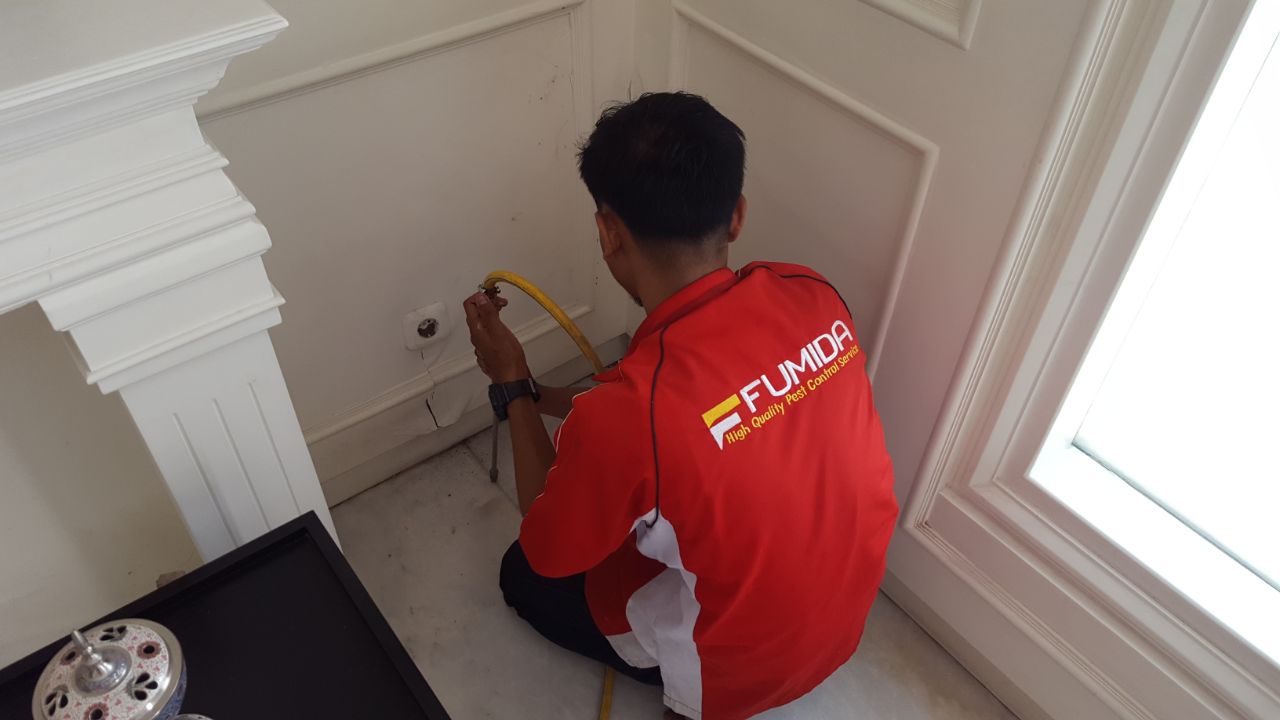
Coptotermes Gestroi Jakarta Extermination Guides To Termites
Coptotermes, also known as gestroi termites isn't just the most destructive of the termite types attacking Jakarta's residences. They're also ones most misunderstood. Pest control literature that is imported from abroad refers to Coptotermes gestroi as a species of subterranean termites which requires constant soil contact. However, Jakarta exterminators find gestroi colonies thriving in roof spaces as well as in wall cavities and furniture that is suspended three stories higher than the earth without visible connections to earth. This isn't a peculiar way of life. It's the species' primary survival strategy. Coptotermes gestroi originated within Southeast Asia, where the monsoon rains wash away soil colonies. Individuals that established satellite nests over flood level were the ones who were able to survive. They didn't die. Jakarta's Coptotermes gestroi that is over 60 million years old, has the genes. It doesn't need soil. It requires wood, moisture, and an expert exterminator.
1. Coptotermes Gestroi Establishes Autonomous Aerial Colonies
Coptotermes Gestroi constructs nests made of chewed wood and saliva. They maintain a stable humidity and also retain moisture. The nests act as independent living support structures. Once they are established in the roof cavity or wall cavity, the colony does not need to be able to touch the ground. When exterminators treat soil, but ignore the aerial nymphs, they manage the foraging stress and don't eliminate the problem.
2. Carton Nest Detection Needs Thermal or Acoustic Imaging
The nests of Coptotermes gestroi are hidden within the structural voids. The nests do not produce Mud tubes. They create acoustic as well as detectable moisture emission. The termite control companies in Jakarta which cater to the premium residential segment require thermal imaging cameras, and Acoustic detectors. A visual inspection alone is not enough to confirm only a fraction of active gestroi infestations.
3. Bait transfer efficiency exceeds other subterranean species.
Coptotermes gestroi exhibits exceptionally efficient trophallaxis--mouth-to-mouth food sharing--compared to Microtermes and Macrotermes species. Toxicant introduced into 0.1% of foraging populations increases to 90% within 14 days. Gestroi are especially vulnerable to baiting due the behavior of gestroi. The exterminators that have low outcomes are using substandard bait matrices or failing to keep the station's water levels in check.
4. Gestroi
The perimeter bait stations are designed to intercept gestroi foragers who travel between nest and landscape feeding areas. Above-ground stations attached to active mudtubes catch foragers who travel between nests and structures. The perimeter stations aren't employed by colonies of gestroi which have built nests on the air or feed exclusively on structures. Above-ground stations can't be a choice. They are the only way to intervene.
5. Gestroi Alates Swarm Through November to February
Coptotermes Gestroi's reproductive flights in Jakarta are centered during the wet early season from November to February. Millions of birds emerge from mature colonies and shed their wings after a short flight, and look for mates in rotting wooden, soil gaps and structural gaps. Each pair of mating pairs could lead to a new colony. Service providers that do not inform homeowners of the possibility of swarming season miss out on the chance to convert reactive extermination contracts into preventive ones.
6. Swarms aren't a sign of new infestation locations
The colony will be situated exactly where the winged termites emerge from the baseboards, light fixtures, or window frames. It's not. Alates may leave the colony via exploratory tunnels or emergent points located meters from the nest of cartons. Exterminators who drill and inject at swarming locations without trace the tunnel network all the way back to their nest are applying cosmetic treatment.
7. Gestroi Foraging Range Exceeds 100 Meters
Colonies of Coptotermes gestroi maintain foraging areas that are more than 100 meters away from the nest. A single colony may spread across multiple structures within the property's boundary. Tunnel networks could connect nearby gardens, homes or retaining walls, street trees, etc. If you treat only the building that is affected, but do not take care of the landscape reservoir, you are ensuring a reinfestation.
8. The real anchor for colony is moisture.
Coptotermes Gestroi nests are chosen by the moisture content, not on the species of wood. Leaking roof flashings and condensation in roof areas, as well as the capillary rise in masonry supply the moisture that supports aerial nests. Pesticides who kill the colony without identifying or correcting the moisture source are treating effect while preserving causes. The colony will return when conditions are restored.
9. Sublethal exposure causes bait-aversion
Foragers of Coptotermes getroi who are subjected sublethally to specific termiticides may develop an abstention. The foragers cease eating bait matrices that contain the active ingredient and invite their friends to follow suit. Exterminators who use the same bait formula continuously don't replace their stations with age or use too much bait, and inadvertently pick for populations that are resistant to foraging.
10. Colony Elimination Confirmation Requires Negative Feeding
The monitor stations left behind by the Coptotermes gesturi colonies following they were eliminated are littered with dried carton nests and mud tubes. There is also no evidence of food. Exterminators who declare colony elimination without ensuring post-treatment monitoring for ninety days are validating absence on the basis of incomplete information. This type of certification exposes homeowners to colony recovery undetected.
The Conclusion
Coptotermes gestroi is Jakarta's most formidable urban pest, not because it is invulnerable but because its biology is widely misunderstood. This species is not dependent on contact with soil. It creates its own, autonomous aerial habitats. It doesn't reveal its nesting location by observing its surface. Instead, it conceals cardboard masses inside the structural cavities. It is not responsive to feeding on the perimeter by itself. It requires the deployment of above-ground station on active feeding sites. It responds in a predictable manner and in accordance with the gradients of moisture. This is something that exterminators cannot accomplish. Jakarta anti-termite solutions that can achieve consistent, documentable gestroi elimination share five characteristics They use devices for detecting acoustic and thermal and distinguish aerial colonies from populations of soil-based foraging They prioritize above-ground stations over perimeter-only programs. They conduct post-treatment moisture audits, and recommend corrective construction; and they keep a ninety-day monitoring period after elimination before issuing colony-free certification. The homeowners who are plagued by gestroi have learned to distinguish between exterminators that offer these services and exterminators that provide only soil treatment and hope. They are the former, and they offer premium pricing and multi-year client retention. The latter are competitive in price and have a high rate of turnover. It's not secret. The research conducted by Indonesian Entomologists, the commercial performance of specialist baiting companies and the rate of reinfestation of generalist pest-control franchises all confirm the existence of this guide. It is not a matter of whether the guide is actually available. It's about what Jakarta exterminators choose to read it and which continue relying on protocols calibrated for termites that do not live here. Follow the top rated anti rayap for website tips including pest control jakarta selatan, jasa rayap, jasa pengendalian hama, pest control harga, rayap kecil, cara membasmi rayap kayu, pembasmi hama, rayap kayu, jasa pengendalian hama, rayap lemari and more.
